

- Free to useNo fees, no hidden costs
- Source-linked informationFacts from UK law, GOV.UK and the Motor Insurers' Bureau
- Insurer-direct linksGet your price from the insurer
Free car insurance and motoring tools
Check your excess, work out fuel costs, check an MOT and see what paying monthly really costs.
Legal standing
Counts as cover
The Road Traffic Act treats a covering note as insurance while it's valid.
How long it lasts
Until its end date
Each note shows when cover stops. Check the date before every drive.
Asked by the police?
7 days
Time allowed to show insurance at a police station you choose.
Database delay
Up to 7 days
A new policy can briefly show as uninsured on the insurance database.
The basics
How a cover note works
By law, a motor policy only counts once your insurer has given you a certificate of insurance, on paper or electronically. A cover note fills any gap: it's a temporary document from your insurer or broker that proves you're insured until the full certificate is issued.
Why they're rarer now
Most insurers email or upload your certificate within minutes of you buying online, so there's no gap to fill. Cover notes now mostly appear when something needs checking or processing by hand.
Same legal weight
While it's in date, a valid cover note proves you have the insurance the law requires. It isn't a lesser kind of cover, just a shorter document.
Not the whole policy
A cover note sums up who and what is insured. The full terms, exclusions and limits are in your policy booklet, so read that when it arrives.
Reading a cover note
What a cover note should show
Layouts vary between insurers, but a cover note should tell anyone who reads it who's insured, which car, for what and for how long. Check each of these as soon as you receive one.
Details on a cover note and what to check
| Detail | What it tells you | What to check |
|---|---|---|
| Policyholder | The name and address of the person insured | Spelling and address match your licence |
| Vehicle | The make, model and registration of the insured car | Every character of the registration is correct |
| Who can drive | The policyholder and any named drivers allowed to drive | Everyone who'll drive is listed |
| Use of the car | What the car can be used for, such as social, commuting or business | It matches how you really use the car |
| Start and end | The exact dates, and often times, the note covers | Cover has started and hasn't ended |
| Insurer and policy or note number | Who provides the cover, and the reference to quote | You know who to call if you're stopped or need to claim |
| Driving other cars | Whether you're insured to drive vehicles other than this one | Don't assume you can; many policies don't allow it |
If anything on the note is wrong, contact your insurer straight away and ask for a corrected one.
Getting one
Six steps to get and use a cover note
If your certificate hasn't arrived and you need to drive, work through these steps before you set off.
- 1
Check your inbox and online account first
Many insurers put your certificate in their app or customer account as soon as you buy. You may already have what you need.
- 2
Ask your insurer or broker for a cover note
If the certificate isn't ready, contact whoever sold you the policy and ask for temporary proof of insurance. Ask whether there's any charge.
- 3
Check every detail on it
Your name, the car's registration, who can drive and the type of use must all be right. A mistake can leave you without the cover you think you have.
- 4
Note the start and end dates
A cover note only protects you between the times printed on it. Put the end date in your calendar.
- 5
Keep it with you while you drive
Save it on your phone and keep a printed copy in the car, in case you're asked to prove you're insured.
- 6
Chase your certificate before the note runs out
If the full certificate hasn't arrived as the end date nears, contact your insurer. Never drive on an expired note.

Your documents
Cover note, certificate or policy: what's the difference?
Buying car insurance can leave you with several documents. Here's what each one does, and which you'd show if you were asked to prove you're insured.
Car insurance documents compared
| Document | What it is | How long it lasts | When you'd use it |
|---|---|---|---|
| Cover note | Temporary proof of insurance issued before the certificate | Only until the end date printed on it | Proving you're insured while the certificate is being issued |
| Certificate of motor insurance | The legal proof of cover the law requires your insurer to give you | The length of the policy, usually a year | Showing the police you're insured, and when you need proof of cover |
| Policy booklet | The full terms, conditions, exclusions and limits | The length of the policy | Checking what's covered and how to claim |
| Policy schedule | Your personal details: car, drivers, excess, cover level and use | The length of the policy, updated when you change something | Checking your details are right and what you pay towards a claim |
Your certificate can be sent electronically if you agreed to that when you bought the policy.
Stay covered
10 tips to avoid gaps in your car insurance
A cover note is a safety net. These habits stop you needing one in a hurry, and keep you on the right side of the law.
1. Insure a new car before you drive it away
Arrange cover from the moment you collect the car. Don't rely on the seller or dealer to insure you for the drive home.
2. Tell your insurer before you change cars
Swapping cars mid-policy needs your insurer's agreement. Ask for confirmation of cover or a cover note before the first drive.
3. Add drivers before they get behind the wheel
A new named driver is only covered once the insurer agrees. Wait for written confirmation.
4. Check the insurance database after any change
Search your registration on the Motor Insurers' Bureau's free check. If it still shows nothing after seven days, call your insurer.
5. Save your documents on your phone
Download the certificate or cover note so you can find it without signal, and keep a printed copy in the glovebox too.
6. Answer every question accurately
Wrong answers about you, the car or its use can mean a refused claim. Check your schedule and correct mistakes quickly.
7. Update your address when you move
Where the car is kept affects your cover and price. Tell your insurer before you move, not after.
8. Make sure your use is right
Commuting or driving for work needs the right class of use. Social-only cover may not protect a trip to the office.
9. Set a reminder before renewal
Check your renewal date a few weeks ahead so cover doesn't lapse, and compare prices before it rolls over.
10. Don't pay twice when you switch
If you're changing insurer, line up the new start date with the old end date, or cancel the old policy properly.

Save money
Changing your policy without paying more than you need
Cover notes often turn up when you change something mid-policy, and changes can cost money. Ask about each of these before you agree.
Admin fees for changes
Many insurers charge a fee for changing your car or drivers. Ask what it is before you make the change.
The new price for the rest of the year
A different car can cost more or less to insure. Ask for the extra premium or refund, not just the fee.
Comparing instead of changing
If a mid-term change pushes your price up a lot, compare it with the cost of cancelling and buying a new policy.
Cancellation charges
Cancelling early usually means a fee and losing part of the premium. Check the charges in your policy first.
Your no-claims bonus proof
If you switch, ask your old insurer for proof of your no-claims bonus so the new one can apply your discount.
Paying in full
Paying once a year avoids the interest that usually comes with monthly instalments, which adds up over the year.
Know your cover
Types of car insurance
A cover note doesn't change your level of cover. It confirms the cover you've bought. Here's what each level includes, whichever document proves it.
Third party only
- Injury to other people
- Damage to other people's cars and property
- Not covered: Damage to your own car, fire or theft
The legal minimum to drive on UK roads.
Third party, fire and theft
- Everything in third party
- Your car if it's stolen
- Your car if it catches fire
- Not covered: Accident damage to your own car
A middle option that's sometimes no cheaper than comprehensive.
Comprehensive
- Everything in TPFT
- Repairs to your own car, even if the crash was your fault
- Often extras such as windscreen cover
- Not covered: Your excess, and anything the policy excludes
Often priced close to the others. Compare all three.
Proving you're insured
Whether you have a cover note or a full certificate, here's what happens if someone needs to check you're insured.
Police checks
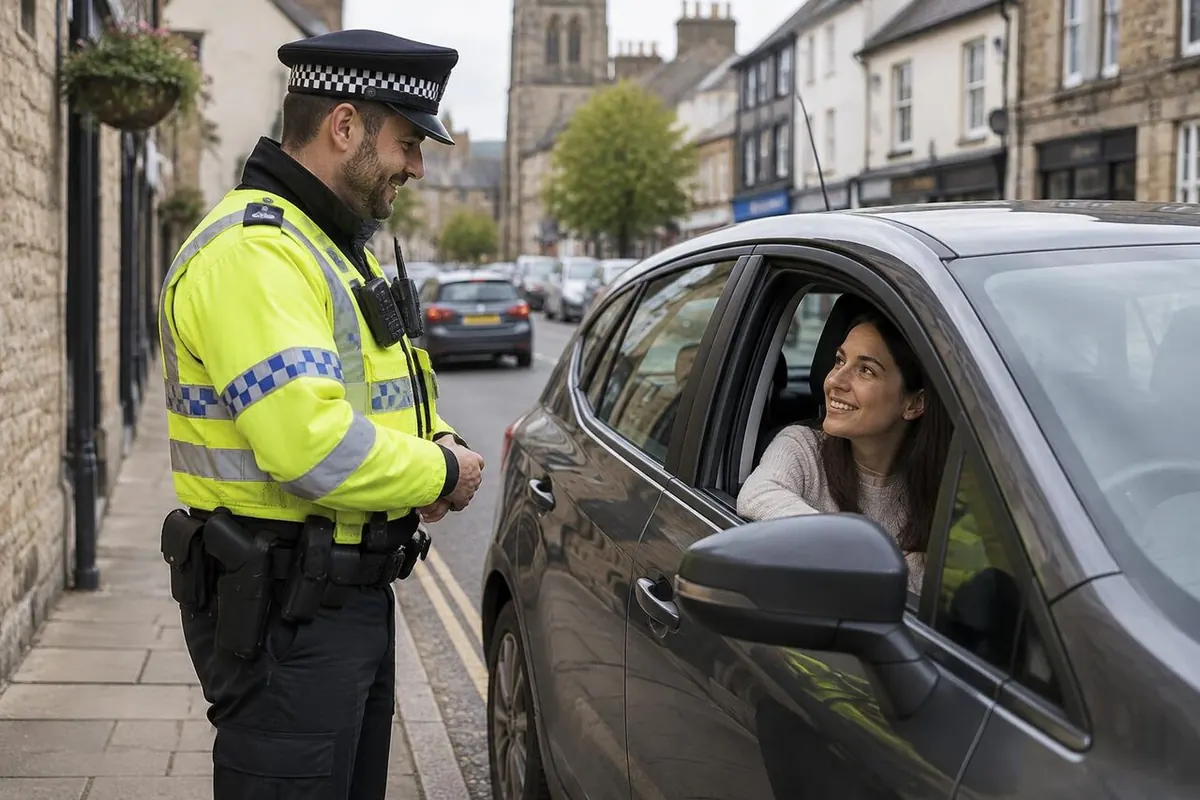
Officers can check the Motor Insurance Database by registration. If they ask for proof and you don't have it with you, you can show it at a police station you choose within seven days.
When the database lags
A new or changed policy can take a few days to appear. Carrying your cover note or certificate shows you're insured in the meantime.
After an accident
Anyone with good reason can ask for your insurance details after a collision. Your cover note has the insurer's name and policy reference they need.
Driving uninsured
If you're caught driving without valid insurance, the police can give you a £300 fixed penalty and 6 points, or the case can go to court.
Never drive on an expired or incorrect cover note
Once the end date passes, the note no longer proves anything, and if your full cover isn't in place you could be driving uninsured. That can mean a £300 fine and 6 points, an unlimited fine and a ban if it goes to court, and the police can seize the car. Altering a cover note or making one up is a criminal offence. If your certificate is late or a detail is wrong, contact your insurer before you drive.
Paying in instalments
Paying monthly: what to check
Spreading the cost can help with budgeting, but monthly payments are usually a credit agreement with interest, so you normally pay more over the year than paying upfront.
- The APR and the total you'll pay over 12 months, not just the monthly amount.
- Whether the first payment is a larger deposit than the rest.
- What happens if a payment fails. Missed payments can lead to your cover being cancelled.
- Whether a credit check is needed before you can pay monthly.
- Fees for changing or cancelling the policy part-way through the year.
If you can afford it, paying annually is usually cheapest. Our monthly vs annual calculator shows the difference. CompareDirect doesn't lend money or arrange finance.

Questions
Cover note FAQs
What is a cover note in car insurance?
A temporary document from your insurer or broker that proves you're insured until your full certificate of motor insurance is issued. It shows who's insured, which car, how it can be used and when the note ends.
Is a cover note legal proof of insurance?
Yes, while it's in date. The Road Traffic Act includes covering notes in its meaning of a policy of insurance, so a valid note proves you have the cover the law requires.
How long does a cover note last?
It lasts until the end date printed on it. There's no single fixed length; it depends on your insurer. If your certificate hasn't arrived as the date gets close, ask your insurer what to do.
When would I get a cover note?
Usually when your full certificate can't be issued straight away: for example, when you buy by phone or post, change your car, add a driver, or the insurer needs to check something before confirming cover.
Do I need a cover note if I bought my insurance online?
Usually not. Most insurers send the certificate by email or make it available in your account straight away, and that's all the proof you need.
My car shows as uninsured on the database. What should I do?
New or changed policies can take a few days to appear. Keep your cover note or certificate with you, search again after seven days, and contact your insurer if it still doesn't show.
Can my insurer cancel cover while I have a cover note?
An insurer can cancel cover in the circumstances set out in your policy, for example if information you gave turns out to be wrong. Check the terms and answer every question accurately.
What's the difference between a cover note and a certificate?
Both prove you're insured. A cover note is short-term and ends on a set date; the certificate lasts for the length of your policy and is the document your insurer must give you by law.
Ready to compare?
Have your licence, the car's registration and your yearly mileage to hand, then compare quotes from insurers direct. Most send your certificate as soon as you buy.
Browse insurers
Latest from CompareDirect
Related news
A registration typo led to a conviction
Why every detail on your policy needs to be right.
Read more
Hit by an uninsured driver? What to do
The steps to take and when the MIB can help.
Read more
Record shopping around, but most drivers stay
Why comparing every year pays off.
Read more
Monthly car insurance: compare the total cost
Why the monthly price isn't the whole story, and what to check first.
Read moreKeep reading
Guides and tools
Is my car insured?
How to check the insurance database for free.
Read more
Temporary car insurance
Short-term cover for a day, a week or a month.
Read more
Named drivers
When adding someone helps, and when it's fronting.
Read more
Making a car insurance claim
What to do, what to expect and how fault is decided.
Read moreSources
- Road Traffic Act 1988, section 147: certificates of insurance
- Road Traffic Act 1988, section 161: meaning of policy of insurance
- Road Traffic Act 1988, section 165: producing documents to the police
- GOV.UK: vehicle insurance
- GOV.UK: driving without insurance
- GOV.UK: if you're in an accident
- Motor Insurers' Bureau: check insurance details
- Consumer Insurance (Disclosure and Representations) Act 2012, section 2
This page is general information, not advice. Insurers set their own prices, discounts and terms, so always read the policy documents before you buy. CompareDirect does not sell or arrange insurance or credit. Photos are illustrative.