

- Free to useNo fees, no hidden costs
- Source-linked informationFacts from GOV.UK, the DVLA enforcement policy and the Motor Insurers' Bureau
- Insurer-direct linksGet your price from the insurer
Free car insurance and motoring tools
Check your excess, work out fuel costs, check an MOT and see what paying monthly really costs.
First contact
Advisory letter
An insurance advisory letter asks you to act before any penalty.
Fixed penalty
£100
Cut to £50 if paid within 21 days of the notice being issued.
Court maximum
£1,000
The top fine if the case goes to court, on top of insurance costs.
The exception
SORN
A car declared off the road doesn't need insurance.
The basics
How the automatic checks catch uninsured cars
Continuous insurance enforcement, often shortened to CIE, compares two databases: the DVLA's record of every registered keeper and the Motor Insurance Database, the central record of insured vehicles. When a car appears on the first but not the second, the system starts writing letters.
No police stop needed
The checks run automatically from the records. Your car can be flagged while it sits on your drive, because the offence is being the keeper of an uninsured vehicle, not just driving it.
A letter comes first
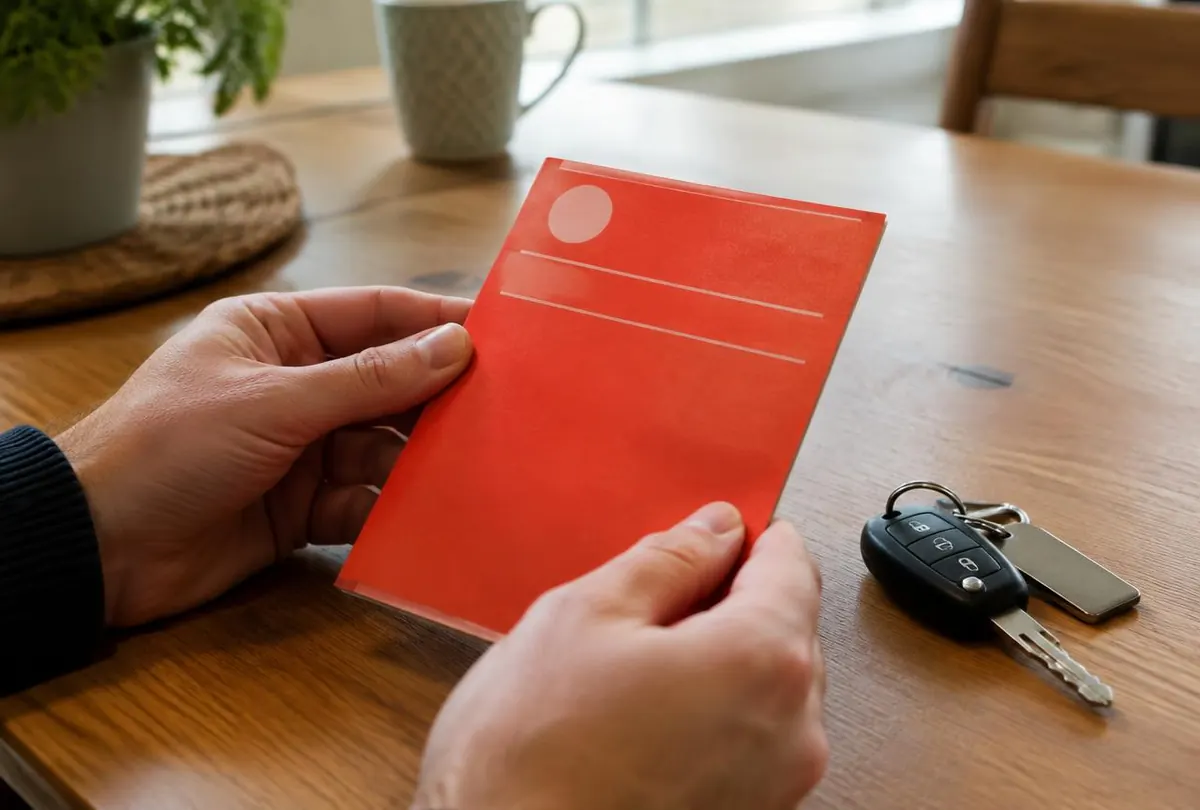
The first step is an insurance advisory letter from the MIB and DVLA. It isn't a fine and won't go on your record, but it's a warning to act quickly: insure the car, declare it off the road, or correct the records.
Then the penalties start
Ignore the letter and the checks continue. If the car still shows as uninsured, a £100 fixed penalty follows, and the car can be clamped, impounded or even destroyed if it's found on a public road.
The penalties
What continuous insurance enforcement can cost
The penalties escalate the longer the car stays uninsured. These figures come from GOV.UK's uninsured vehicles guidance.
Continuous insurance enforcement penalties for the registered keeper
| Stage | What happens | What it costs |
|---|---|---|
| Advisory letter | A warning letter asking you to insure, SORN or correct the records | Nothing, if you act |
| Fixed penalty | Issued if the car still shows as uninsured after further checks | £100, cut to £50 if paid within 21 days |
| Clamping or impounding | The car can be clamped or seized if found on a public road | Release fees on top of the penalty |
| Court | If the penalty isn't paid or the case is pursued | A fine of up to £1,000 |
| Destruction | An impounded car can be disposed of or destroyed if charges aren't paid | The car itself |
You still have to pay for insurance on top of any fine. Driving the car uninsured is a separate, more serious offence: £300 and 6 points.
If you get a letter
Six steps if an insurance advisory letter arrives
The advisory letter is your chance to fix things before any penalty. Act on it within days, not weeks.
- 1
Check the database first
Do a free check of your registration on the MIB's service. If it now shows as insured, the letter may have crossed with a new policy and you need do nothing.
- 2
If you have insurance, find the mismatch
A wrong registration digit, a temporary policy or an insurer that hasn't updated the database can all trigger a letter. Call your insurer and ask them to correct the record.
- 3
If you don't have insurance, buy it now
If the car is on the road or in use, insure it straight away. The letter means the system has already noticed.
- 4
If the car is off the road, declare a SORN
A Statutory Off Road Notification tells the DVLA the car is kept off the road, so insurance isn't needed. It's free and quick online.
- 5
If you've sold or scrapped the car, tell the DVLA
The letter means the DVLA still thinks you're the keeper. Update the keeper details online or by post so the letters stop.
- 6
Keep proof of whatever you do
Save the insurance certificate, SORN confirmation or DVLA acknowledgement. If a penalty arrives by mistake, you'll need it.
The exceptions
When you don't need insurance
There are a few lawful ways to keep a car without insurance. Each has its own rules, and getting them wrong brings you straight back into the enforcement system.
Lawful exceptions to continuous insurance enforcement
| Situation | What you must do | Watch out for |
|---|---|---|
| Car kept off the road | Declare a SORN with the DVLA | The car must stay off public roads entirely, including parked on the street |
| Car sold or transferred | Tell the DVLA the keeper has changed | Until the DVLA records the change, letters and penalties come to you |
| Car stolen | Tell the police and your insurer, and give the DVLA the crime reference | Report it promptly; a gap looks like an uninsured car |
| Car scrapped | Use an authorised treatment facility and tell the DVLA | Keep the certificate of destruction |
| Motor trade vehicles | Vehicles registered as 'in trade' between keepers are excluded | Cars you keep for your own use are not excluded |
Northern Ireland has different rules. The GOV.UK guidance explains the position there.
Avoid a fine
10 ways to avoid an automatic insurance fine
The system is automatic, so the protection has to be automatic too. Build these habits and the letters never start.
1. Never let cover lapse
Line up the new policy to start the moment the old one ends. Even a day's gap can trigger the checks.
2. SORN any car you're not using
A restoration project, a car waiting to be sold, a second car you're not driving: if it's off the road, declare it.
3. Tell the DVLA the day you sell
Keeper changes are quick online. Until the DVLA knows, you're liable for the car's insurance status.
4. Check the database after insuring
New policies can take a few days to appear. If yours hasn't after seven days, call your insurer before a letter arrives.
5. Check the registration on your policy
One wrong digit means your car shows as uninsured. Compare the certificate with the number plate.
6. Watch cars registered to you but driven by others
The keeper gets the letter, whoever drives the car. Make sure family members keep their cover live.
7. Act on the advisory letter within days
It's a warning, not a fine, but the next step costs money. Fix the record or insure the car immediately.
8. Don't rely on a temporary policy for long
Some short-term policies don't appear on the database promptly. A full policy or a SORN is safer for anything beyond a short spell.
9. Pay the fixed penalty within 21 days if it's right
The £100 penalty halves to £50 for prompt payment. If it's wrong, challenge it with proof instead of ignoring it.
10. Keep every confirmation
SORN confirmations, keeper change acknowledgements and certificates end disputes in one phone call.
Save money
Keeping a car legally without paying for cover you don't need
If a car is genuinely off the road, you don't have to insure it. These checks keep you legal for free.
A SORN is free
Declaring a car off the road costs nothing and takes minutes online. It also stops the vehicle tax.
The car must be genuinely off the road
A SORN car can't be parked on a public road, even outside your house. It needs a drive, garage or other private land.
SORN before the insurance ends
Declare the SORN before the policy expires, so there's no uninsured gap for the system to spot.
Un-SORN when you're ready to drive
Tax the car again and insure it before it touches a public road. The SORN ends when you tax it.
Selling is cleaner than storing
A car you'll never use again costs nothing once it's sold and the DVLA knows. Weigh storage hassle against a sale.
Laid-up cover exists for projects
Some insurers offer laid-up cover for cars being restored off the road. It protects against fire and theft while the car is SORN.
Ignoring the advisory letter is the expensive option
The insurance advisory letter is the cheapest warning you'll ever get: act on it and it costs nothing. Ignore it and the system keeps checking, the £100 fixed penalty follows, and a car found on a public road can be clamped, impounded or destroyed. If the letter is wrong, prove it quickly with your certificate or SORN confirmation. If it's right, insure the car or declare it off the road the same day.
Paying in instalments
Paying monthly: what to check
A failed monthly payment can cancel a policy mid-year, and the first you know may be an advisory letter. If you pay monthly, protect the payment as carefully as the policy.
- The date the payment leaves your account each month.
- What your insurer does after one failed payment, and how quickly they cancel.
- Whether you get a warning before cancellation, and how: email, letter or app.
- Whether the card on the policy is still valid.
- The total yearly cost of monthly payments versus paying once.
If you can afford it, paying annually is usually cheapest. Our monthly vs annual calculator shows the difference. CompareDirect doesn't lend money or arrange finance.

Questions
Continuous insurance enforcement FAQs
What is continuous insurance enforcement?
A system that automatically cross-checks the DVLA's keeper records against the motor insurance database. The keeper of a car that shows as uninsured, and hasn't been declared off the road, faces penalties without the car being stopped by police.
What is an insurance advisory letter?
A warning letter sent by the MIB and DVLA when your car doesn't show a live policy on the database. It isn't a fine and doesn't go on your record, but you must act: insure the car, declare it off the road, or correct the records.
How much is the continuous insurance enforcement fine?
The fixed penalty is £100, reduced to £50 if paid within 21 days. If the case goes to court, the fine can be up to £1,000, and you still have to pay for insurance on top.
My car is parked on my drive and never driven. Do I need insurance?
Not if you declare it off the road with a SORN. Without a SORN, the keeper of an uninsured car can be fined even if the car never moves.
I have insurance but got a letter. Why?
Usually a mismatch: a wrong registration digit on the policy, a new policy that hasn't reached the database yet, or a temporary policy that wasn't logged. Check your registration on the MIB's free service, then call your insurer to fix the record.
I sold the car but I'm getting letters. What do I do?
The DVLA still has you as the keeper. Tell the DVLA about the sale online or by post straight away; until the keeper record changes, enforcement letters come to you.
Can the DVLA really take my car?
Yes. If the fixed penalty isn't resolved, a car found on a public road can be clamped or impounded, and it can be disposed of or destroyed if the penalty and release fees aren't paid.
Is driving uninsured treated the same way?
No, it's more serious. Driving without insurance is a separate offence with a £300 fixed penalty and 6 points, or an unlimited fine and a ban in court. Continuous insurance enforcement applies to keeping the car, even if it never moves.
Ready to compare?
If the letter arrived because cover lapsed, the fix is a live policy. Have your licence, the car's registration and your yearly mileage to hand, then compare quotes from insurers direct.
Browse insurers
Latest from CompareDirect
Related news
A registration typo led to a conviction
Why every detail on your policy needs to be right.
Read more
Hit by an uninsured driver? What to do
The steps to take and when the MIB can help.
Read more
Record shopping around, but most drivers stay
Why comparing every year pays off.
Read more
Monthly car insurance: compare the total cost
Why the monthly price isn't the whole story, and what to check first.
Read moreKeep reading
Guides and tools
The grace period myth
Why there's no automatic extension after expiry.
Read more
Is my car insured?
How to check the insurance database for free.
Read more
SORN and insurance
Declaring a car off the road, step by step.
Read more
If your insurer cancels your policy
What to do next and how to declare it.
Read moreSources
- GOV.UK: uninsured vehicles and continuous insurance enforcement
- GOV.UK: DVLA enforcement of vehicle tax, registration and insurance offences
- Motor Vehicles (Insurance Requirements) Regulations 2011
- Motor Insurers' Bureau: what to do if you receive an insurance advisory letter
- Motor Insurers' Bureau: check insurance details
- GOV.UK: register your vehicle as off the road (SORN)
This page is general information, not advice. Insurers set their own prices, discounts and terms, so always read the policy documents before you buy. CompareDirect does not sell or arrange insurance or credit. Photos are illustrative.