
- Free to useNo fees, no hidden costs
- Source-linked informationFacts from GOV.UK, the police and the Financial Ombudsman
- Insurer-direct linksGet your price from the insurer
Free car insurance and motoring tools
Check your excess, work out fuel costs, check an MOT and see what paying monthly really costs.
Discount
Not guaranteed
Some insurers ask about dash cams. Many don't change the price.
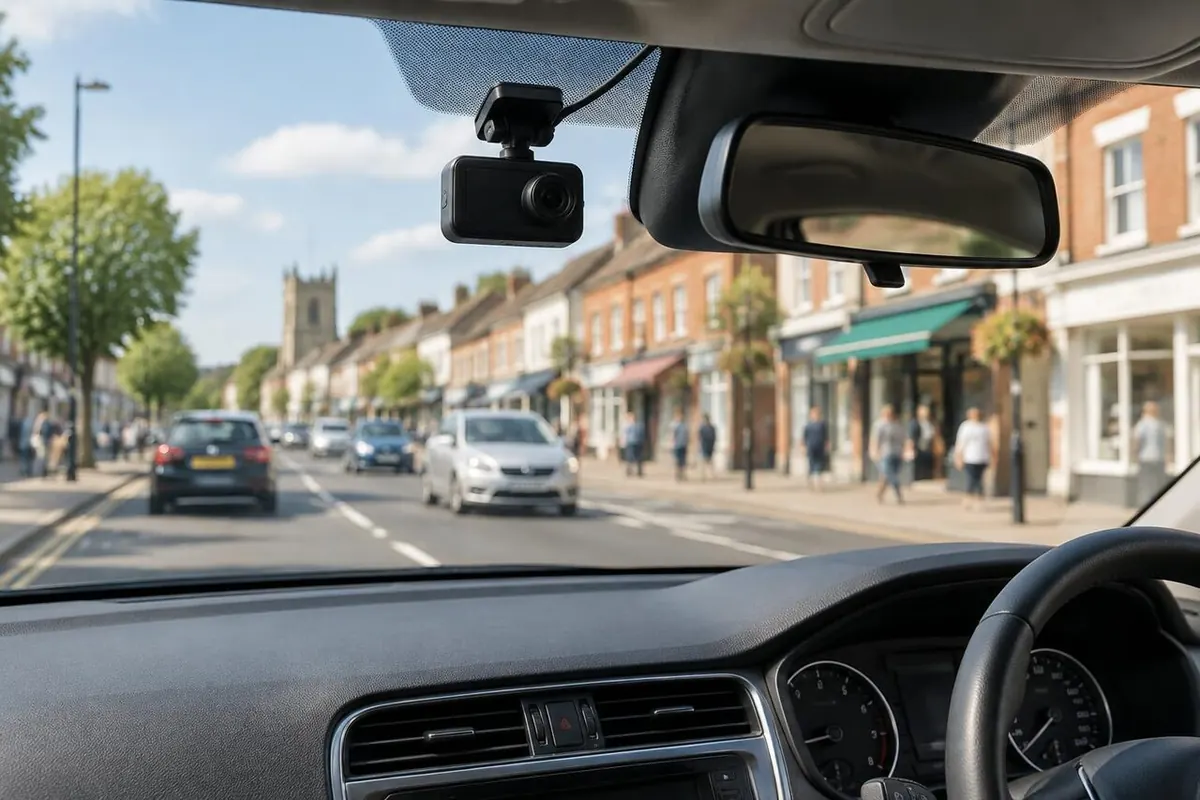
Best position
Behind the mirror
A blocked view of the road through the wiper area can fail an MOT.
Police clips
Within 7 days
Many police forces ask for footage of an offence within a week.
No details swapped?
24 hours
The time you have to report an accident to the police.
The basics
How a dash cam affects your car insurance
A dash cam is a small camera fixed to your windscreen that records the road while you drive. To an insurer it matters in three ways: the price you're quoted, how a claim is settled and whether the camera itself is covered if it's stolen or damaged.
Your price
There's no rule that a dash cam lowers your premium. Some insurers ask whether you have one and may take it into account; others ignore it. Treat any discount as a bonus, not the reason to buy one.
Your claim
This is where a dash cam earns its keep. Clear footage shows who did what, which can help an insurer decide fault faster and protect your no-claims bonus when the crash wasn't your fault.
The camera itself
Whether the dash cam is covered if it's stolen or damaged depends on your policy. It may fall under accessories or personal belongings, usually with a limit, so check the wording and keep your receipt.
Choosing a dash cam
The features that make footage useful
There's no official list of insurer-approved dash cams, so ignore the label and look at what the camera actually records. These are the features that make a clip easier for an insurer or the police to rely on.
Dash cam features and why they matter
| Feature | Why it helps | What to look for |
|---|---|---|
| Video resolution | Number plates and road signs need to be readable | At least Full HD (1080p); higher resolution helps at night and at a distance |
| Wide viewing angle | Captures more lanes, junctions and pavements | A wide lens, but not so wide that distances look distorted |
| GPS and accurate time stamp | Shows exactly where and when the incident happened | Built-in GPS, and a clock you set correctly, including the clocks going back and forward |
| Automatic event lock | Stops the loop overwriting the clip you need | A G-sensor that locks footage when it feels a bump |
| Rear camera | Records shunts from behind, a common type of crash | A front and rear kit, or a separate rear unit |
| Parking mode | Can record bumps and scrapes while the car is parked | Usually needs hardwiring, plus a cut-off so it can't flatten your battery |
| Low-light performance | Many collisions happen at dusk or after dark | Good night video in reviews, not just daytime samples |
Police forces generally need footage that clearly shows the other vehicle's full registration number.
After an accident
Six steps to use dash cam footage in a claim
Footage only helps if it survives and reaches the right people. Follow these steps once everyone is safe.
- 1
Stop, stay safe and swap details
The law says you must give your name, address and the car's registration to anyone with reasonable grounds to ask. If you can't, report it to the police within 24 hours.
- 2
Save the clip straight away
Most dash cams record on a loop and overwrite old footage. Press the save or lock button, or take the memory card out once you're parked safely.
- 3
Keep the original file untouched
Make a copy before you do anything else. Don't trim it, add music or write captions over it; insurers and police want the footage exactly as it was recorded.
- 4
Tell your insurer you have footage
You must report the accident to your insurer even if you don't plan to claim. Mention the footage and send it the way they ask, usually by upload or email link.
- 5
Add what the camera can't show
Take photos of the damage and the scene, note the weather, and collect names and numbers from any witnesses. Footage works best alongside other evidence.
- 6
Challenge a fault decision with evidence
If you disagree with how your insurer records fault, complain to it first and point to the footage. If you're still unhappy, the Financial Ombudsman can look at the complaint for free.
Fitting it
Plug-in, hardwired or professionally fitted?
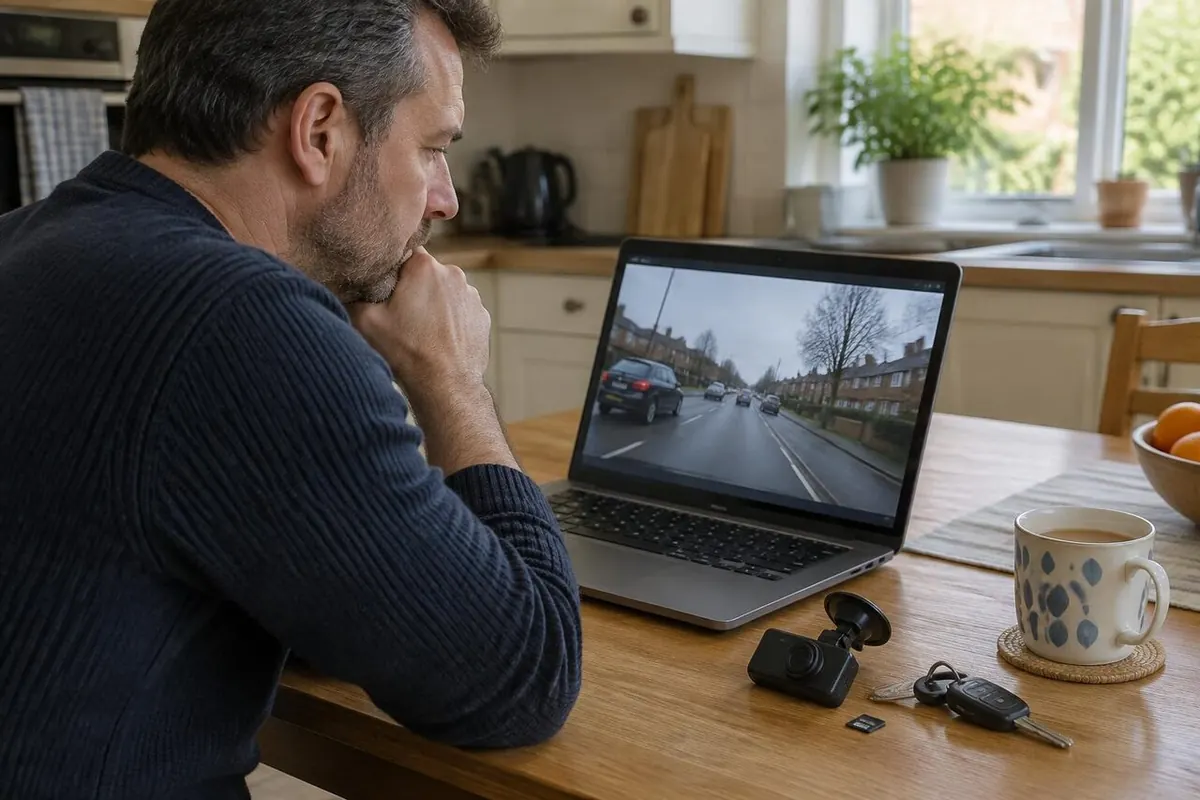
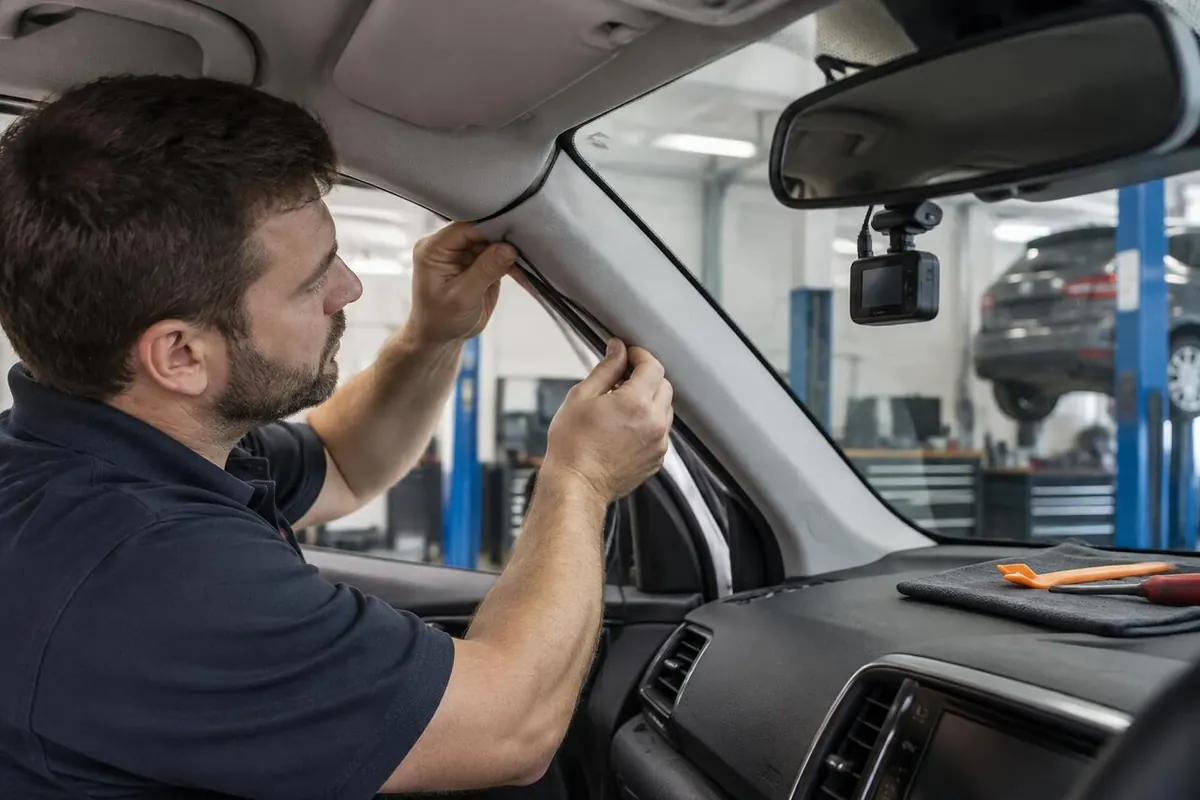
You don't need a professional to fit a dash cam, and footage counts either way as long as it shows the road clearly. Where you put it matters more than how it's wired: mount it high, behind the rear-view mirror, so it stays out of the area the wipers clear in front of you.
Ways to power a dash cam
| Option | How it works | Good for | Watch out for |
|---|---|---|---|
| Plug-in | Powered from the 12V socket or a USB port | Quick to fit yourself and easy to move between cars | Loose cables; it may only record while the engine is on |
| Hardwired DIY | Wired into the fuse box with a hardwiring kit | Tidy cables and parking mode | Only if you're confident with car electrics; a mistake can affect warranty or other systems |
| Professional fit | A fitter hides the cable and connects it to the fuse box | Parking mode with less risk and a neat finish | An extra cost; ask what's included and whether the work is guaranteed |
MOT testers can fail a car if something significantly blocks the driver's view of the road through the swept area of the windscreen.
Save money
10 ways a dash cam can help keep your price down
A dash cam rarely cuts your premium on its own. Used well, it protects the things that really drive your price: your claims record and your no-claims bonus.
1. Answer the dash cam question honestly
If a quote form asks whether you have one, say yes only if it's fitted and working. A wrong answer can cause problems at claim time.
2. Protect your no-claims bonus
A fault claim usually cuts an unprotected no-claims bonus, often by two years. Footage can help show a crash wasn't your fault.
3. Keep your distance
Leave at least a two-second gap, double it in the wet and up to ten times more on ice. It also makes you a harder target for crash-for-cash scams.
4. Add a rear camera
Being hit from behind is common, and the front camera can't see it. A rear unit records who ran into whom.
5. Check it works every month
Make sure it's recording, the date and time are right, and the memory card isn't full or failing. Replace cards that throw errors.
6. Never fiddle with it while driving
The Highway Code warns against being distracted by in-car screens. Using a hand-held phone app while driving can mean 6 points and a £200 fine.
7. Use parking mode if you park on the street
It can catch the driver who scrapes your car and drives off, which helps your insurer recover the cost from them.
8. Compare the full price, not the discount
A dash cam discount from one insurer can still leave you paying more than a cheaper quote elsewhere. Compare the total.
9. Check the accessory limit
If your camera cost more than your policy's limit for accessories or belongings, ask about raising it rather than assuming it's covered.
10. Tell passengers if it records inside
Cabin cameras and sound recording capture the people in your car. Let them know, especially if you drive for work.

Discounts
Where a dash cam can save you money
Savings from a dash cam usually come from claims going your way, not from a lower quote. Ask about each of these when you compare.
The dash cam question on quote forms
Some insurers ask whether you have a dash cam. Answer accurately and see whether it changes the price.
Faster, fairer claims
Clear footage can settle arguments about who was at fault, so a claim is less likely to be split fifty-fifty.
Keeping your no-claims bonus
When fault is clearly the other driver's, the insurer can recover its costs from them, so your bonus doesn't have to suffer.
Protection from crash for cash
Fraudsters stage collisions by braking hard in front of you. Footage helps show what really happened.
Black box or app policies
If you want your driving to bring the price down, a telematics policy is the product built for that. Compare it with an ordinary quote.
Paying in full
Not a dash cam discount, but paying once a year avoids the interest that usually comes with monthly instalments.
Know your cover
Types of car insurance
A dash cam doesn't change your level of cover. It helps prove what happened. Here's what each level pays for when your footage shows the other driver was to blame, and when it doesn't.
Third party only
- Injury to other people
- Damage to other people's cars and property
- Not covered: Your own car, and usually the dash cam
The legal minimum. Footage still helps you claim from the other driver's insurer.
Third party, fire and theft
- Everything in third party
- Your car if it's stolen
- Your car if it catches fire
- Not covered: Accident damage to your own car
Check whether a stolen dash cam is included.
Comprehensive
- Everything in TPFT
- Repairs to your own car, even if the crash was your fault
- Often accessories such as a dash cam, up to a limit
- Not covered: Your excess, and anything the policy excludes
Often priced close to the others. Compare all three.
Is the dash cam itself covered?
Policies treat dash cams differently. Check these points in your documents before you rely on cover.
Accessories or personal belongings
Comprehensive policies often cover in-car equipment under one of these headings, usually with a set limit per claim.
Theft from the car
Some policies only pay if the car was locked and the item was out of sight. Take a removable camera with you when you can.
Your excess and no-claims bonus
Claiming for a cheap camera may cost more than it's worth once you pay the excess and lose bonus years.
Proof of ownership
Keep the receipt or order confirmation and a note of the model. Insurers usually ask for proof when you claim.
Never edit footage or fake a dash cam
Editing a clip, staging a collision or claiming you have a dash cam when you don't can be fraud. It can lead to a refused claim, a cancelled policy and a record that makes future insurance harder to get. Remember too that footage shows your own driving: the police review it when you send it in. If you think a crash was staged, tell the police and the Insurance Fraud Bureau's CheatLine.
Paying in instalments
Paying monthly: what to check
Spreading the cost can help with budgeting, but monthly payments are usually a credit agreement with interest, so you normally pay more over the year than paying upfront.
- The APR and the total you'll pay over 12 months, not just the monthly amount.
- Whether the first payment is a larger deposit than the rest.
- What happens if a payment fails. Missed payments can lead to your cover being cancelled.
- Whether a credit check is needed before you can pay monthly.
- Fees for changing or cancelling the policy part-way through the year.
If you can afford it, paying annually is usually cheapest. Our monthly vs annual calculator shows the difference. CompareDirect doesn't lend money or arrange finance.

Questions
Dash cam insurance FAQs
Does a dash cam lower car insurance?
Sometimes, but not reliably. Some insurers ask about dash cams and may reflect one in the price; many don't. The bigger saving usually comes from footage helping a claim go your way.
Do I have to tell my insurer I have a dash cam?
If the quote or renewal asks, you must answer accurately, because the law expects you to take reasonable care when answering an insurer's questions. If it doesn't ask, check your policy wording or ask the insurer.
Can my insurer ask for my footage?
Yes. If you've told an insurer you have a dash cam, expect to be asked for footage after an incident. Not having it when you said you did can cause problems with the claim.
Can dash cam footage be used against me?
It can. Footage records your driving as well as everyone else's, and police forces say they review the sender's driving too. Drive as if the clip will be watched.
Is it legal to have a dash cam in the UK?
Yes. The law requires a full view of the road ahead, so fit it where it doesn't block your view, ideally high behind the mirror, and don't operate it while driving.
How do I send dash cam footage to the police?
Most police forces have an online form, often called Operation Snap, for driving offences. Many ask for clips within 7 days and need the vehicle's full registration. Collisions are reported separately, through the force's road traffic incident form or 101.
Should I post dash cam footage online?
It's best not to. Sharing a clip publicly could affect a police case or an insurance claim, and it shows other people. Send it to your insurer or the police instead.
Do I need a professional to fit my dash cam?
No. A plug-in camera is easy to fit yourself. Hardwiring is only needed for features like parking mode, and a professional can do it neatly if you're not confident with car electrics.
Ready to compare?
Have your licence, the car's registration and your yearly mileage to hand, then compare quotes from insurers direct. Tick the dash cam box only if yours is fitted and working.
Browse insurers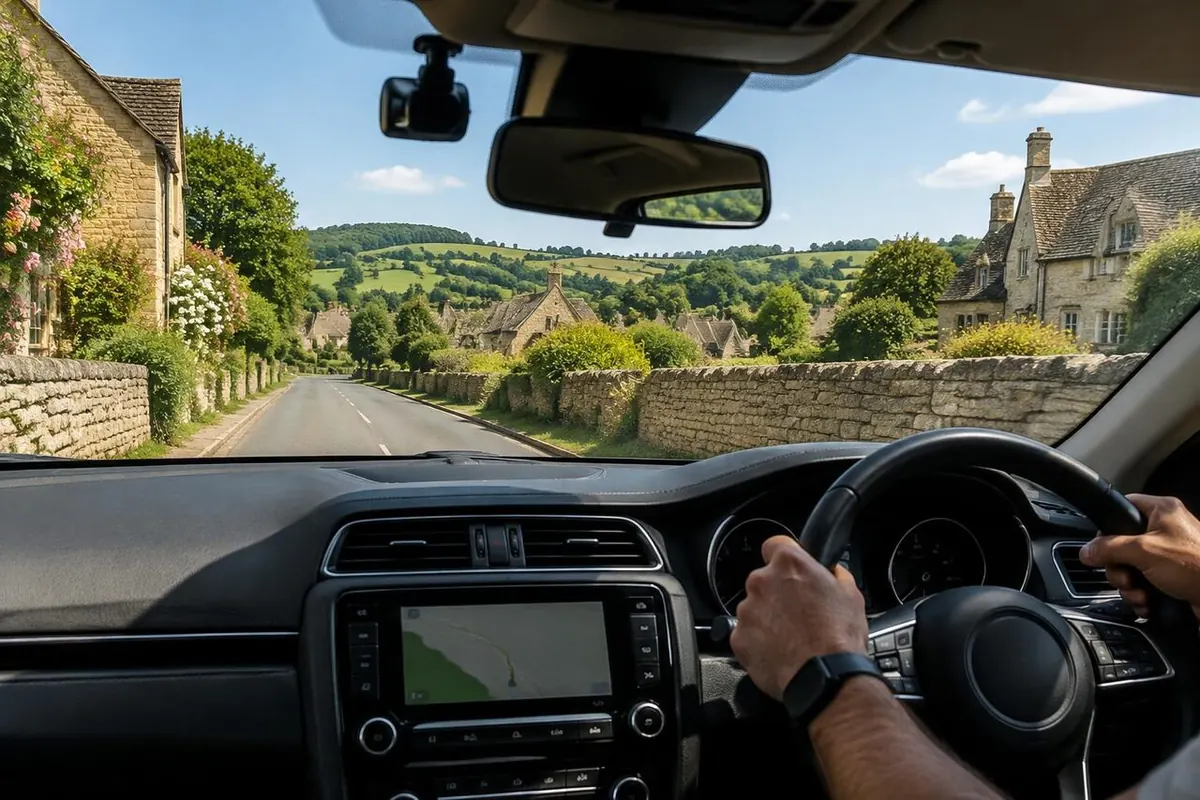
Latest from CompareDirect
Related news
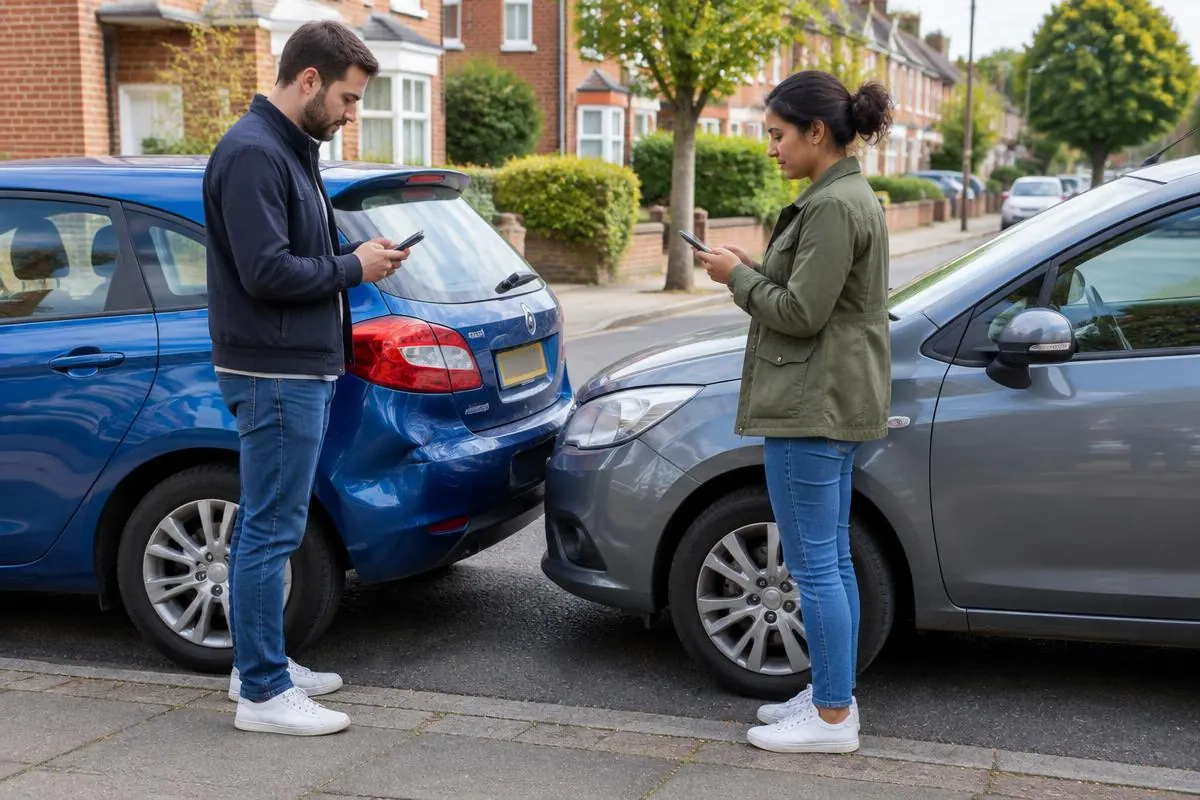
Hit by an uninsured driver? What to do
The steps to take and when the MIB can help.
Read more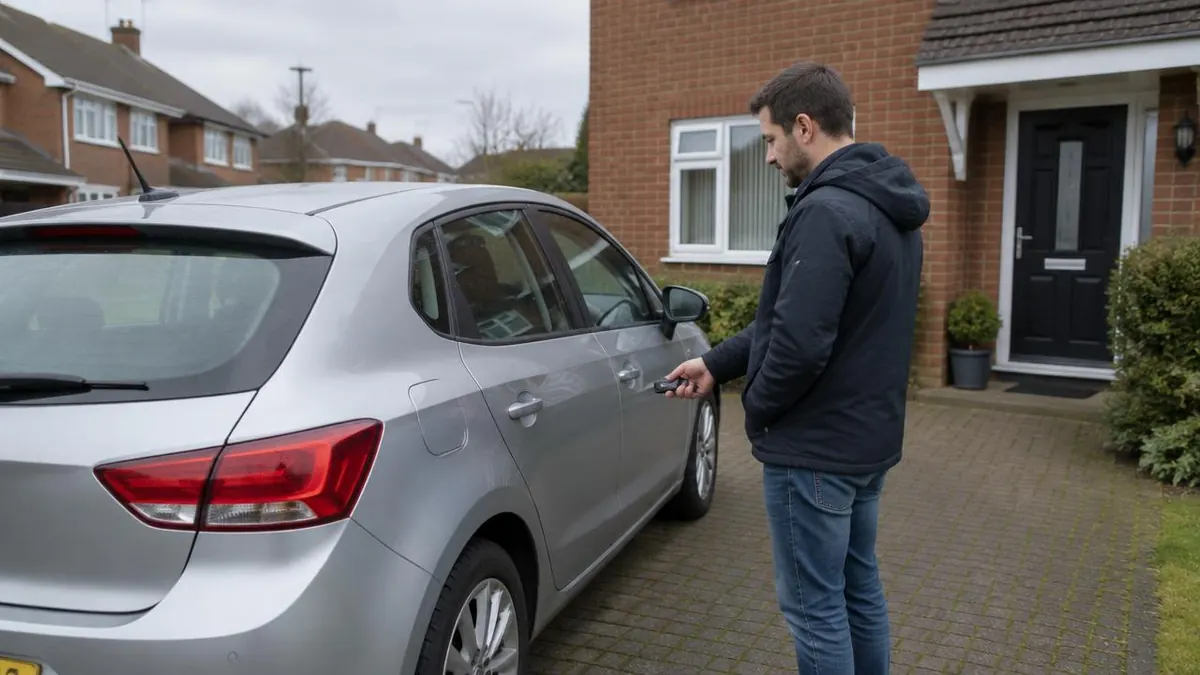
A registration typo led to a conviction
Why every detail on your policy needs to be right.
Read more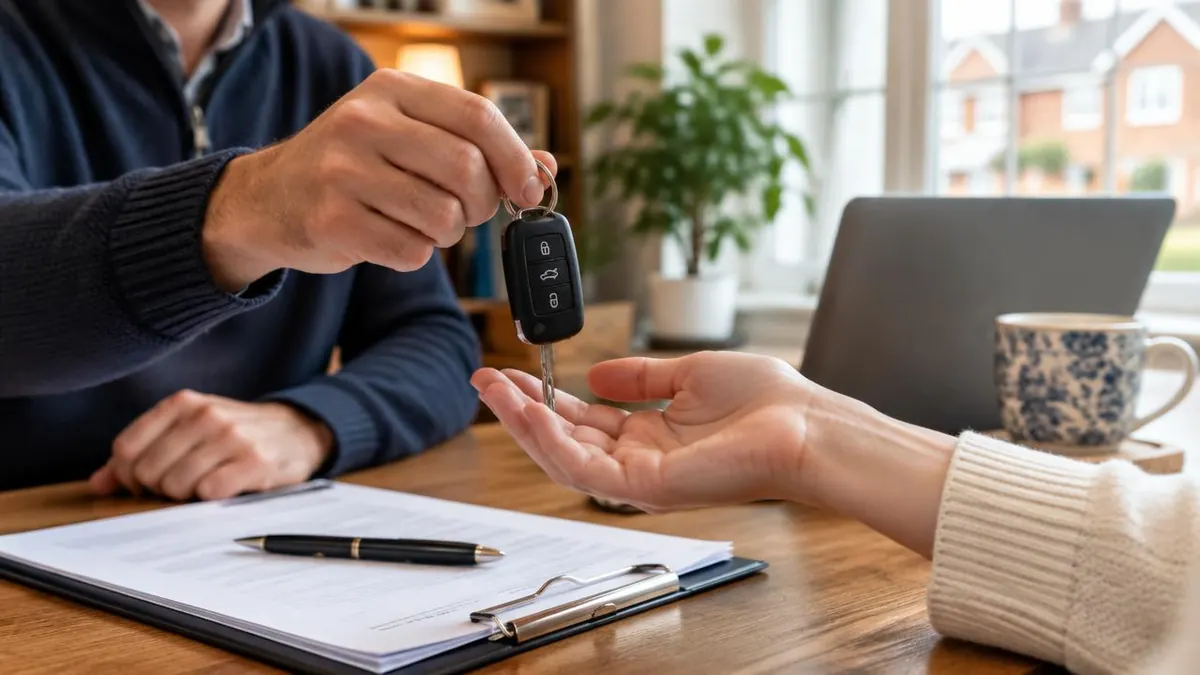
Record shopping around, but most drivers stay
Why comparing every year pays off.
Read more
Monthly car insurance: compare the total cost
Why the monthly price isn't the whole story, and what to check first.
Read moreKeep reading
Guides and tools
Making a car insurance claim
What to do, what to expect and how fault is decided.
Read more
No-claims bonus explained
How it builds, how a claim affects it and protecting it.
Read more
Black box car insurance
How telematics prices your cover on how you drive.
Read more
Car insurance excess
What you pay when you claim, and choosing the right level.
Read moreSources
- GOV.UK: if you're in an accident
- GOV.UK: MOT inspection manual, visibility
- GOV.UK: view to the front and windscreen obscuration
- GOV.UK: The Highway Code, rules 103 to 158
- GOV.UK: using your phone while driving
- Financial Ombudsman: fault claims and no-claims bonuses
- Financial Ombudsman: motor insurance complaints
- Insurance Fraud Bureau: crash for cash
- West Midlands Police: Operation Snap
- Durham Constabulary: Operation Snap
- Consumer Insurance (Disclosure and Representations) Act 2012, section 2
This page is general information, not advice. Insurers set their own prices, discounts and terms, so always read the policy documents before you buy. CompareDirect does not sell or arrange insurance or credit. Photos are illustrative.