
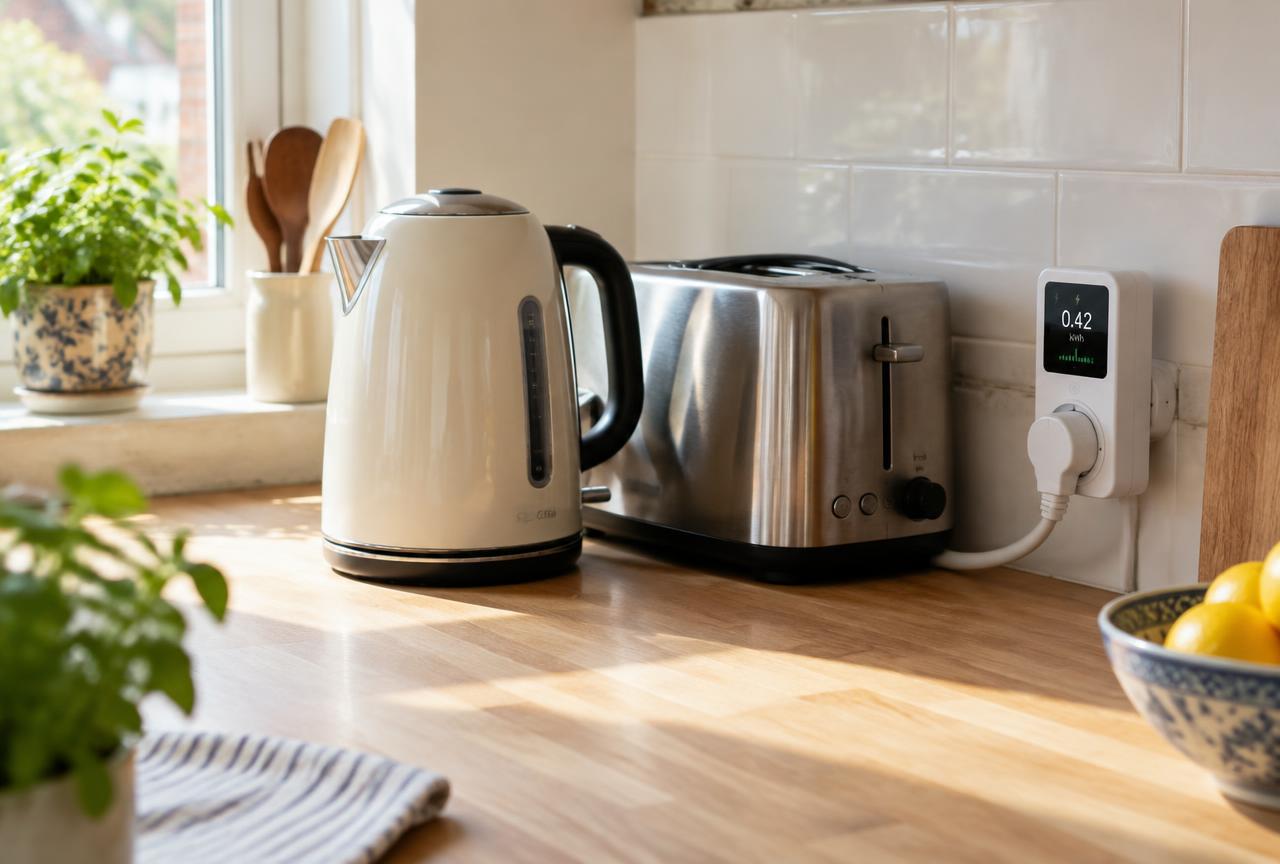
1. Find the power
Pick an appliance, or type the watts from its label.
2. Add the time
How long it runs each time, and how often you use it.
3. See the cost
Each use, each hour, and a day, week, month and year.
Start with a common appliance
Tap one to fill in typical figures, then change anything to match your own.
Showing typical figures for: Kettle
Boiling about a litre of water.
Cost each time you use it
3.95p
- Electricity used each time
- 0.15 kWh
- Cost for every hour it runs
- 79.0p
Used 4 times a day, that's about:
- A day
- £0.16
- A week
- £1.11
- A month
- £4.80
- A year
- £57.64
That's 219 kWh a year. These figures leave out the standing charge, about £200.13 a year at the cap average, which you pay whatever you use. An estimate, not a quote.
Typical running costs at the price cap rate
Here is what each appliance above costs with its typical figures, from the most expensive over a year to the least. Your own appliance and habits will differ, so use the calculator for your own numbers.
| Appliance | Power | Typical use | Each use | A year |
|---|---|---|---|---|
| Electric heater2,000W, 2 hr, 1× a day | 2,000W | 2 hr, 1× a day | £1.05 | £384.27 |
| Tumble dryer2,500W, 1.5 hr, 3× a week | 2,500W | 1.5 hr, 3× a week | 98.7p | £154.40 |
| Electric shower9,500W, 8 min, 7× a week | 9,500W | 8 min, 7× a week | 33.3p | £121.69 |
| Electric oven2,000W, 45 min, 4× a week | 2,000W | 45 min, 4× a week | 39.5p | £82.34 |
| Dehumidifier200W, 8 hr, 3× a week | 200W | 8 hr, 3× a week | 42.1p | £65.88 |
| Kettle3,000W, 3 min, 4× a day | 3,000W | 3 min, 4× a day | 3.95p | £57.64 |
| Fridge freezer25W, 24 hr, 1× a day | 25W | 24 hr, 1× a day | 15.8p | £57.64 |
| Washing machine800W, 1 hr, 4× a week | 800W | 1 hr, 4× a week | 21.1p | £43.92 |
| Television100W, 4 hr, 1× a day | 100W | 4 hr, 1× a day | 10.5p | £38.43 |
| Air fryer1,500W, 20 min, 5× a week | 1,500W | 20 min, 5× a week | 13.2p | £34.31 |
| Microwave1,200W, 5 min, 7× a week | 1,200W | 5 min, 7× a week | 2.63p | £9.61 |
| LED light bulb8W, 5 hr, 1× a day | 8W | 5 hr, 1× a day | 1.05p | £3.84 |
Typical figures are rough guides for common UK appliances, not measurements of any particular model.
How to work out what an appliance costs
Electricity is charged by the kilowatt hour (kWh): the energy a 1,000 watt appliance uses in one hour. To find the cost of using something, turn its power into kilowatts, multiply by the hours it runs, then multiply by your unit rate.
kWh = watts ÷ 1,000 × hours running
Cost = kWh × unit rate
For example, a 2,000W heater on for 1 hour uses 2 kWh. At 26.32p a unit that costs about 52.6p.
Where to find an appliance's power
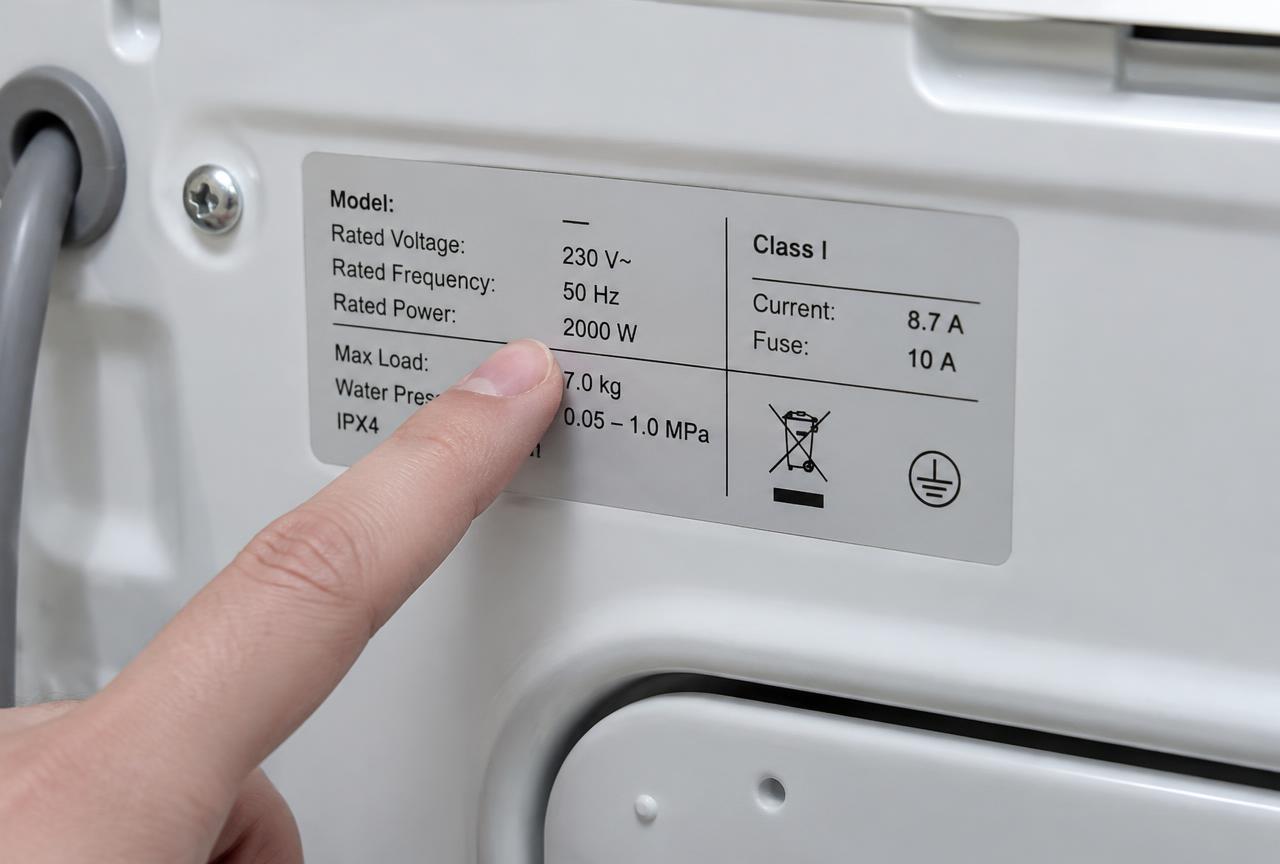
Look for the rating plate or sticker, usually on the back, underneath, or inside the door. It shows the power in watts (W) or kilowatts (kW); 1kW is 1,000W. The manual and the maker's website list it too. If only amps are shown, multiply by 230 volts for a rough figure in watts.
The plate shows the most power the appliance can draw. Fridges, freezers, ovens and heaters with a thermostat switch on and off once they reach temperature, so over an hour they often use less than the plate says. A plug-in energy monitor or your smart meter display will show the real figure.
Watts, kilowatts and kWh
Watts and kilowatts measure how fast an appliance uses electricity. A kilowatt hour measures how much it has used in total. A 3kW kettle uses electricity quickly but only for a few minutes, while a 25W fridge freezer uses it slowly all day and night. That is why a kettle can cost less over a year than something with a much smaller power figure.
Easy ways to cut running costs
Boil only what you need
A kettle uses energy for every drop of water in it. Filling it for one mug instead of four cuts each boil to a fraction.
Use the smallest appliance that does the job
An air fryer or microwave heats a small amount of food for less than warming a whole oven, which also loses heat every time the door opens.
Cut a few minutes from the shower
An electric shower is often the most powerful thing in a home. Two minutes less each day adds up over a year.
Dry clothes outside when you can
A tumble dryer is one of the costliest appliances to run. If you do use one, a heat pump dryer uses far less per load.
Wash at 30°C and run full loads
Most of a washing machine's energy goes into heating the water, so a cooler wash makes the biggest difference.
Switch off at the wall
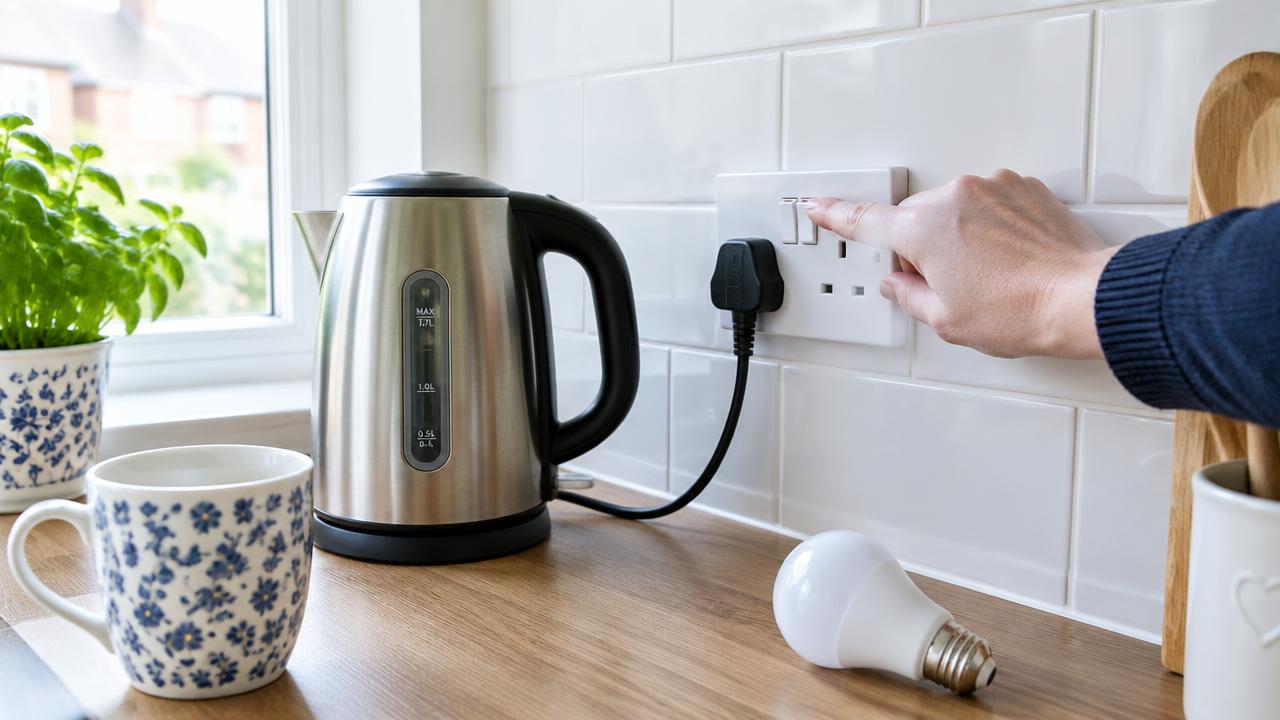
TVs, consoles, chargers and set-top boxes all draw a little power on standby. A smart plug with a timer makes it easy.
What this calculator leaves out
The standing charge is a fixed daily amount you pay whatever you use, so it is not part of any one appliance's cost. If you are on a time-of-use tariff such as Economy 7, type the rate for the time you actually run the appliance. Ofgem's price cap is a limit on each unit, not a promise of what you pay, and rates differ by region, meter and payment method, so your own bill is the best figure to use.
The starting rates are Ofgem's price cap averages for 1 October to 31 December 2026 for a default tariff paid by Direct Debit in England, Scotland and Wales, and the starting usage figures are Ofgem's medium-consumption averages. Ofgem's cap is a maximum per unit, not the price you are promised: your supplier sets your rates, they differ by region and meter type, and prepayment customers pay different rates again. Check the unit rate and standing charge on your own bill before you act on anything here.
Next steps

Found this helpful? Share it with family and friends.
Know someone who might find this useful? Share it with them.