Compare car insurance providers
The short answer
Get your car checked before the cold sets in, keep a small winter kit in the boot, and clear every window, light and the roof before you set off. On ice or snow, drive slowly, brake and steer gently and leave far more space: the Highway Code warns stopping distances can be up to ten times longer on ice. Only travel when you need to, and check your breakdown cover and policy before a long trip.
Step 1: Get your car ready before the cold arrives
Most winter breakdowns come from a handful of problems: flat batteries, worn tyres, low coolant and dirty or frozen screens. A short check in early November can save you a cold wait at the roadside later. A garage winter check is often cheap, but you can do most of it yourself.
- Battery: if it is more than about five years old or the engine turns over slowly on cold mornings, have it tested.
- Tyres: the legal minimum tread is 1.6mm across the central three-quarters of the tyre, but more grip is safer in winter. Check pressures monthly, as they drop in the cold.
- Coolant (antifreeze): check the level and mix against your handbook so the engine does not freeze.
- Screenwash: use a proper winter screenwash that will not freeze, not plain water.
- Lights and wipers: check every bulb works and replace wipers that smear or judder.
- Consider winter or all-season tyres if you live somewhere hilly or rural. They are not a legal requirement in the UK, but tell your insurer if you fit them, as some count them as a modification.
Step 2: Pack a simple winter car kit
You do not need expensive gear. The aim is to stay warm, visible and in contact if you are stuck for a few hours. Keep the kit in a bag in the boot from November to March.
- Ice scraper and de-icer spray
- Phone charger or power bank
- Torch with spare batteries
- Warm coat, gloves, hat and a blanket
- Water and snacks, plus a flask of a hot drink for long trips
- Hi-vis vest and a warning triangle (do not use the triangle on a motorway)
- Jump leads or a jump starter
- A small shovel and a bag of grit, sand or cat litter for grip
- First aid kit and any medicines you need
Step 3: Clear the car properly before every journey
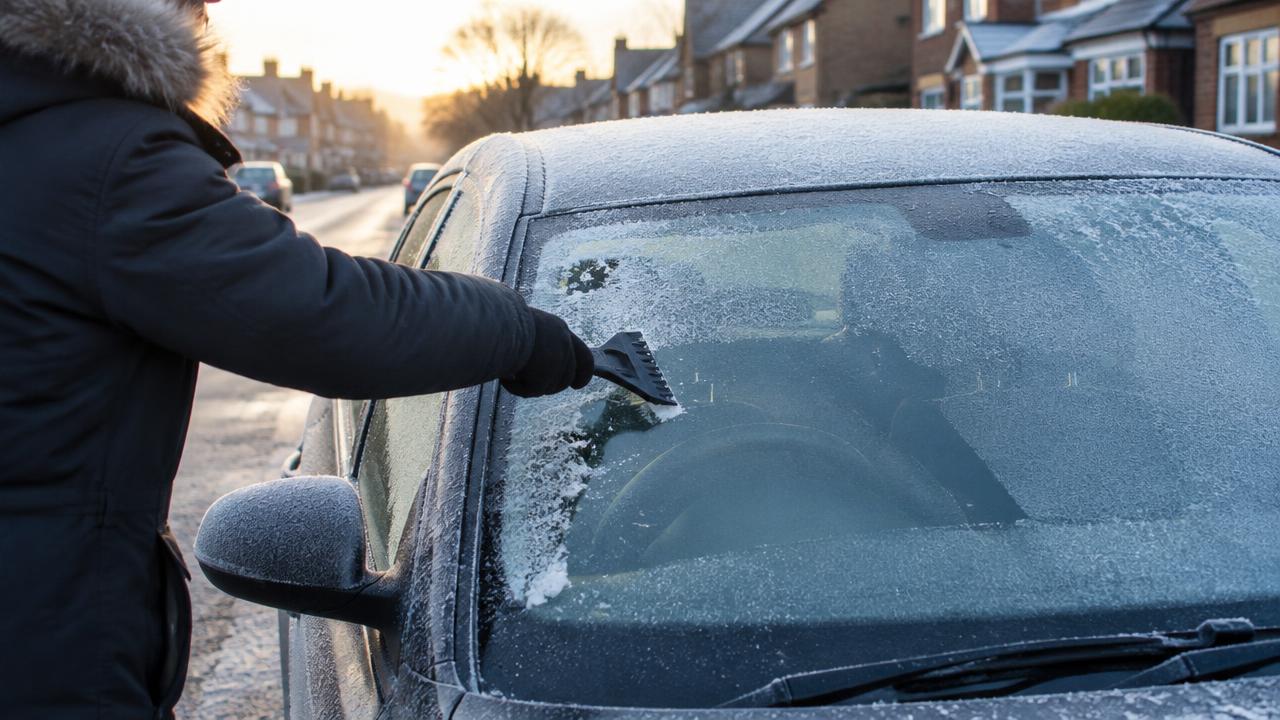
Rule 229 of the Highway Code says you must be able to see out of every window, and lights, mirrors and number plates must be clean and clear. Snow left on the roof can slide onto your windscreen or blow into the car behind, and driving without proper vision can lead to a fine and penalty points.
- Give yourself an extra 10 to 15 minutes on frosty mornings.
- Use a scraper and de-icer, never boiling water, which can crack the glass.
- Do not use a bank card or anything metal as a scraper; it can scratch the screen.
- Never leave the engine running and the car unattended to defrost. It is an easy target for thieves and your insurer may refuse the claim.
- Clear snow from the roof, bonnet, lights and number plates as well as the windows.
- Run the heater and air conditioning together to clear misted windows faster.
Step 4: How to drive on ice and snow
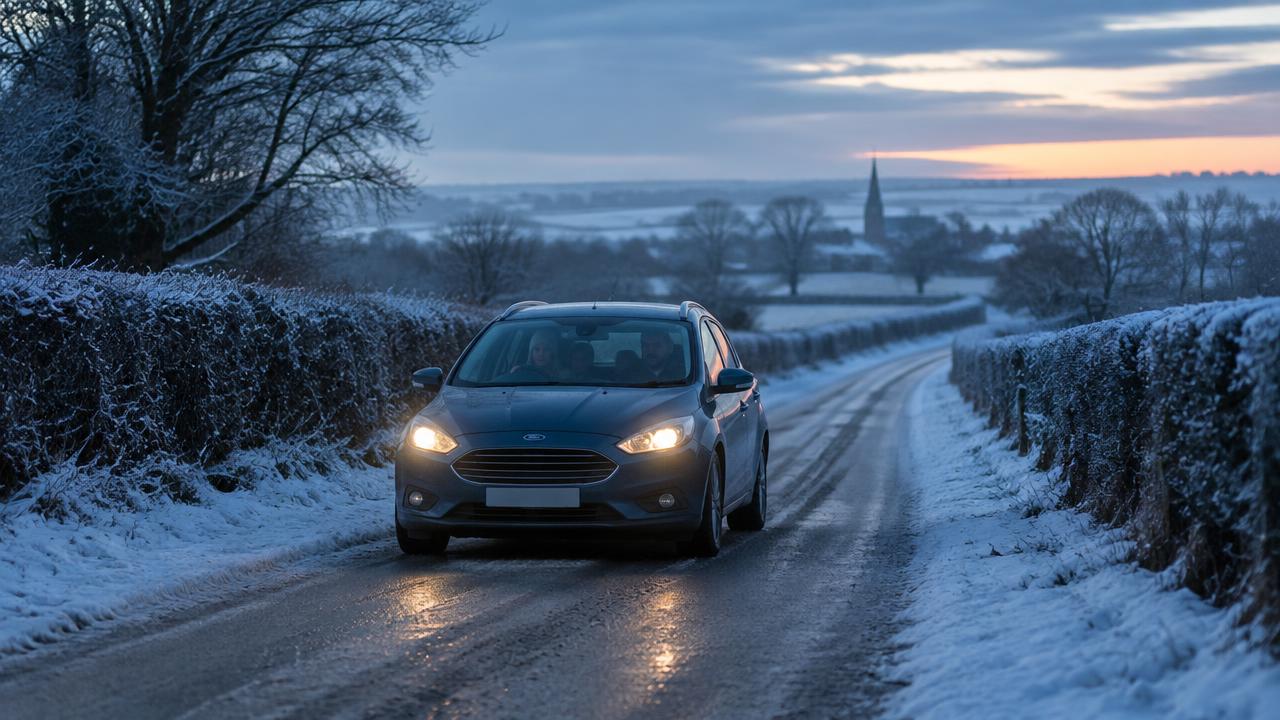
The key in slippery conditions is to be smooth. Sudden braking, accelerating or steering is what makes tyres lose grip. The Highway Code says stopping distances can be up to ten times longer on ice than on a dry road, and at least double in the wet.
- Pull away in second gear, easing off the clutch gently, to avoid wheel spin.
- Drive slowly in the highest gear you can, and leave up to ten times the normal gap to the car in front.
- Brake gently and early. If you have to stop on a hill, try to wait until the road ahead is clear so you do not have to stop halfway up.
- If the car skids, ease off the accelerator and steer gently in the direction of the skid. Do not stamp on the brake.
- Watch for black ice: if the steering suddenly feels light or road noise goes quiet, you may be on ice.
- Stick to main roads, which are more likely to be gritted, and keep well back from gritters and snow ploughs.
Step 5: Fog, rain, low sun and dark evenings
Winter is not just snow. Heavy rain, fog, low sun and long hours of darkness cause many accidents. Use dipped headlights whenever visibility is poor, and only use fog lights when you cannot see more than about 100 metres, switching them off when it clears so you do not dazzle other drivers.
- In heavy rain, slow down. If the steering feels light you may be aquaplaning: ease off the accelerator and do not brake hard.
- Do not drive through floodwater you cannot see the bottom of. Just 30cm of moving water can float a car, and flood damage from driving into deep water may not be covered.
- Keep sunglasses in the car and a clean windscreen inside and out for low winter sun.
- Take a break every two hours on long journeys; warm cars and dark evenings make drivers drowsy.
Step 6: If you break down or get stuck
Your safety comes before the car. On a motorway, get onto the hard shoulder or into an emergency area if you can, switch on hazard lights, leave by the left-hand doors and wait behind the barrier. If you cannot get out safely, keep your seatbelt on and call 999.
- Save your breakdown provider's number in your phone before winter.
- If you are stuck in snow on a quiet road, it is often safer to stay in the car. Keep warm with your blanket and coat.
- If you run the engine for heat, make sure the exhaust pipe is clear of snow so fumes cannot get into the car.
- To get moving again, clear snow from around the wheels, put grit or sand in front of the tyres and pull away gently in second gear.
- Do not leave your car on a motorway hard shoulder longer than needed; it is a dangerous place to wait.
How winter affects your car insurance
Car insurance does not change by season, but winter is when many claims happen. Comprehensive cover usually pays for damage to your own car after a skid or crash, while third party only cover does not. Check your policy wording before you need it.
- Breakdown cover is usually separate from car insurance. Check whether yours covers home starts as well as roadside help.
- Many policies exclude theft if you leave keys in the car or the engine running unattended, for example while defrosting.
- Windscreen cover is often included with comprehensive policies, but check the excess for a replacement.
- Driving into obviously deep floodwater may be treated as reckless and claims can be refused.
- If you are driving abroad on a winter break, check European cover, breakdown help and any rules for winter tyres or snow chains in that country.
- Report any accident to your insurer promptly, even if you do not plan to claim.
Before you decide
- Have the battery, tyres, coolant, lights and wipers checked in early November.
- Pack a winter kit and keep your phone charged.
- Clear all windows, lights, mirrors, number plates and the roof before every trip.
- Drive slowly and smoothly, and leave up to ten times the usual gap on ice.
- Check the weather and road news, and only travel in severe weather if you need to.
- Read your policy and breakdown cover so you know what help you have.
Frequently asked questions
Is it illegal to drive with snow on your car roof?
There is no specific law against roof snow, but the Highway Code says you must be able to see out of every window and keep lights and number plates clear. If snow falls onto your screen or into another car, you could be charged with driving without due care or using a vehicle in a dangerous condition.
Do I need winter tyres in the UK?
No, they are not required by law in the UK. They can improve grip in cold, icy and snowy conditions. Some countries in Europe do require them in winter, so check before driving abroad, and tell your insurer if you fit them.
Can I leave my car running to defrost it?
It is not a good idea. Leaving a car running and unattended is an offence on a public road under engine idling rules, and many insurers will not pay out if the car is stolen while the keys are in it.
Does car insurance cover accidents in snow and ice?
Comprehensive cover usually pays for damage to your own car after a weather-related accident, subject to your excess. Third party cover only pays for damage to other people and their property. Your no-claims bonus may still be affected.
How much space should I leave on icy roads?
The Highway Code says stopping distances can be up to ten times longer on ice, so leave far more space than normal and drive slowly enough to stop well within the distance you can see.
Sources and further reading
- The Highway Code: rules for driving in adverse weather (rules 226 to 237)
- GOV.UK: tyre tread legal limit
- National Highways: driving in severe weather
- Met Office: weather warnings
- Swinton: driving in winter (topic inspiration)
Prepared by CompareDirect using the sources above. Policy eligibility, cover and claims depend on the provider’s current documents and your circumstances.
Before you buy
Our car insurance listings compare provider features and quote destinations, not personalised premiums. Check the exact product, eligibility, excesses and full terms on the provider’s website. Nothing here is a personalised insurance recommendation.
More guides
- Car insurance for new drivers: a UK guide
- Named drivers, main drivers and fronting
- Temporary car insurance UK: short-term cover
Want the next one when it lands? Follow CompareDirect on Facebook — new guides and money-saving tips go there first.
Found this helpful? Share it with family and friends.
Send this to the new driver in your family before the frost arrives.